
Modern personal care consumers expect more from cleansing products. A shampoo or body wash needs to clean effectively, produce pleasant foam, feel comfortable on the skin, and deliver a smooth sensory experience. At the same time, formulators are increasingly looking for surfactant systems that support mild, natural-oriented and high-performance formulations.
This is where Cocamidopropyl Betaine (CAPB) plays an important role.
CAPB is a widely used amphoteric surfactant that can be combined with anionic and nonionic surfactants to improve foam, cleansing performance, viscosity and overall formulation balance. It is commonly found in shampoos, body washes, facial cleansers, hand washes and other personal care products.
For formulators looking to create a mild cleanser with rich foam and good texture, CAPB can be an important part of the surfactant system.
What Is Cocamidopropyl Betaine (CAPB)?
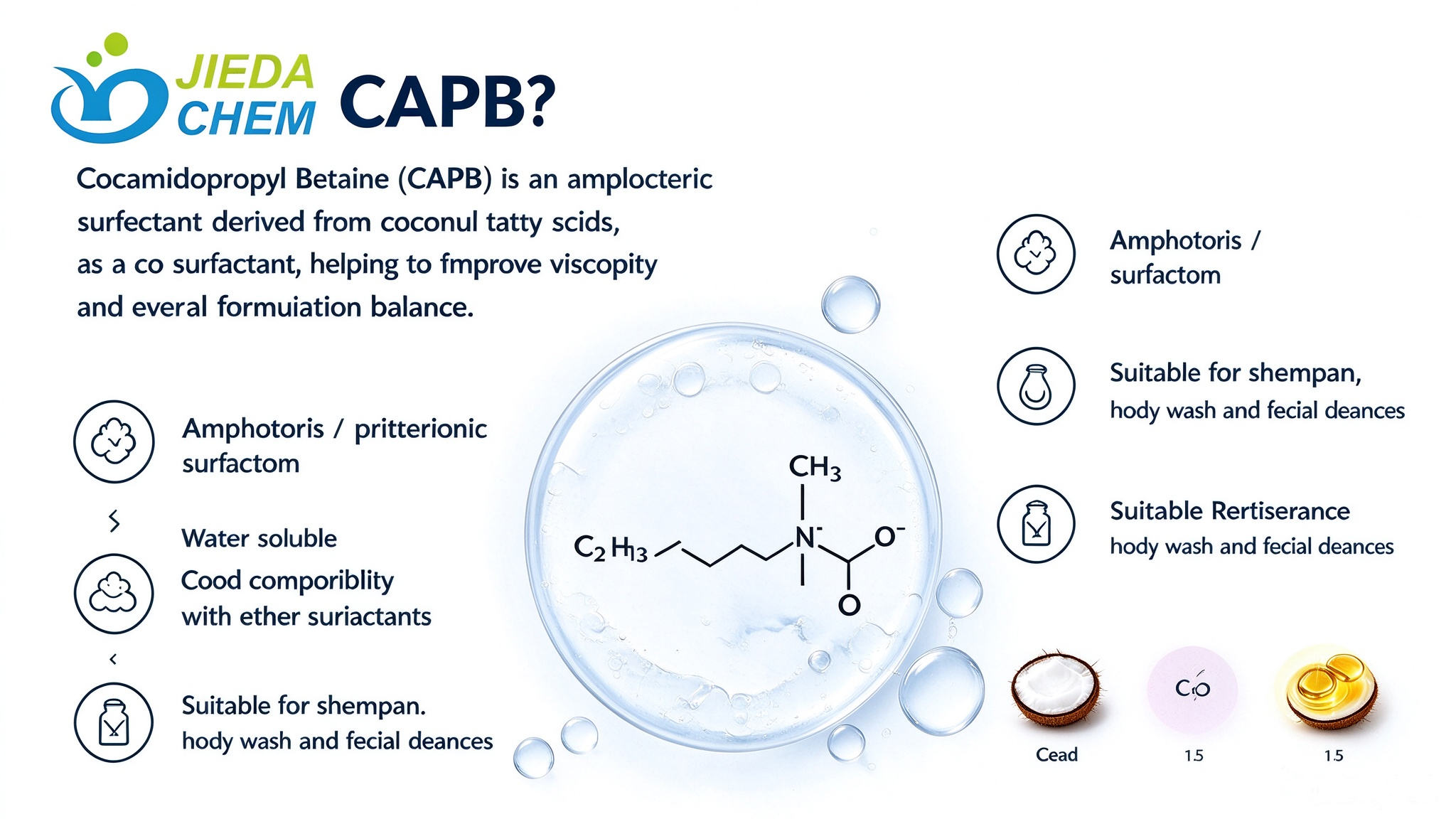
Cocamidopropyl Betaine, commonly known as CAPB or CAB, is an amphoteric, zwitterionic surfactant widely used in personal care and cleaning formulations.
It contains both positively and negatively charged functional groups, which contributes to its compatibility with different types of surfactants. This makes CAPB particularly useful as a co-surfactant rather than simply as a standalone cleansing ingredient.
Jieda’s CAPB is available in 30% and 35% grades and is supplied as a clear to light-yellow liquid. According to Jieda’s product specification, it is water soluble, has a pH of 5.0–7.0 at a 10% solution, and is suitable for applications including shampoo, body wash, hand sanitizer and household detergents.
Key characteristics of CAPB
- Amphoteric / zwitterionic surfactant
- Good compatibility with other surfactants
- Water soluble
- Supports foam performance
- Can contribute to viscosity
- Suitable for mild cleansing systems
- Useful in shampoo, body wash and facial cleanser formulations
- Available in 30% and 35% grades from Jieda
Explore Jieda Cocamidopropyl Betaine 30% / 35%
Why Is CAPB Popular in Personal Care Formulations?
CAPB has become a popular ingredient because it can perform several useful functions within a cleansing system.
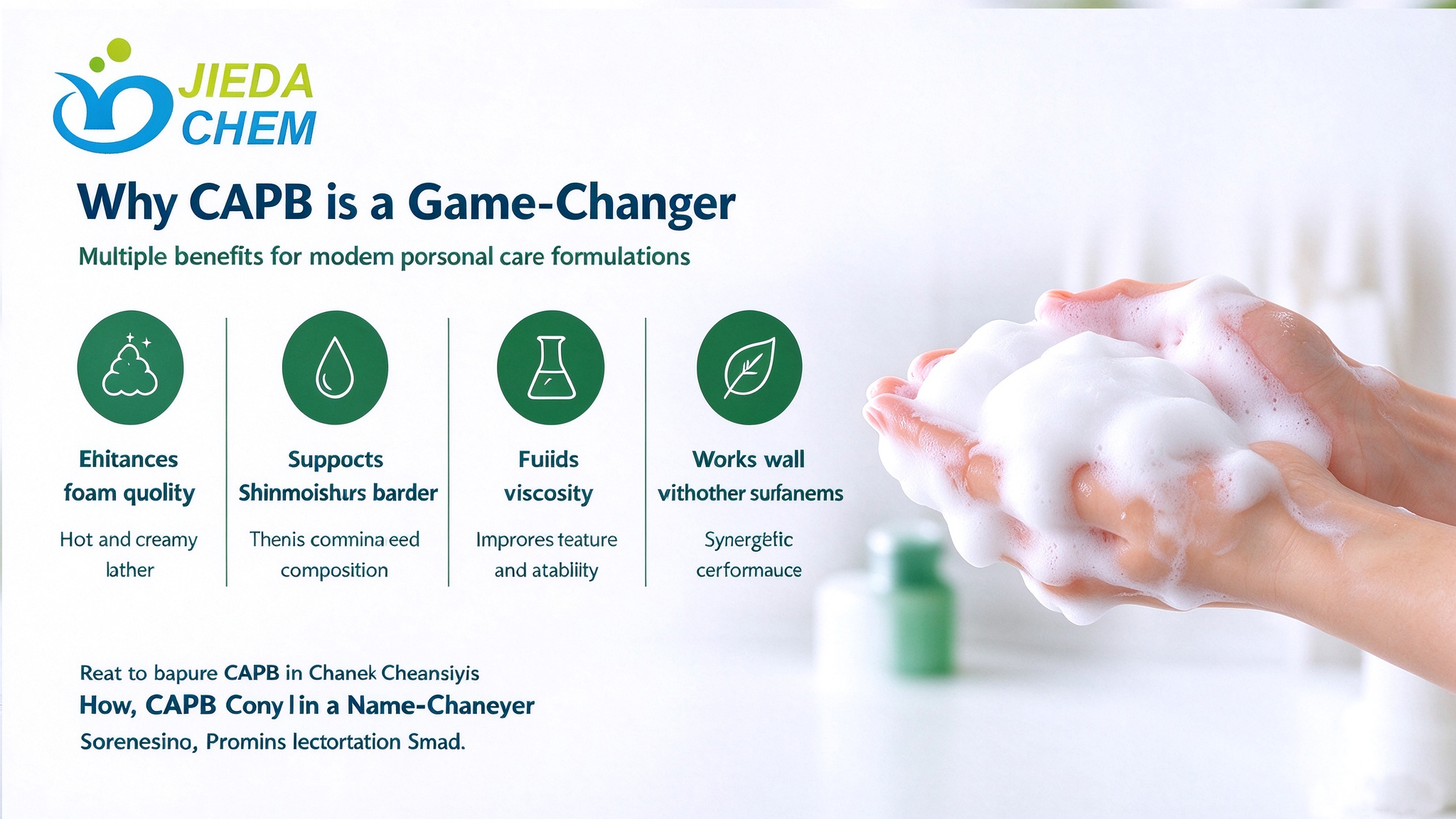
1. CAPB Enhances Foam Quality
Foam is one of the most noticeable characteristics of a shampoo or body wash.
Consumers often associate rich, creamy foam with an effective and pleasant cleansing experience. CAPB can be combined with primary surfactants to help improve foam characteristics and create a smoother, denser lather.
The goal is not simply to produce more foam. A well-designed surfactant system should provide foam that is stable, pleasant during application and easy to rinse.
This makes CAPB particularly useful in shampoos, shower gels, body washes and facial cleansers.
2. CAPB Can Help Build Viscosity
Another important advantage of CAPB is its ability to contribute to viscosity in surfactant systems.
However, CAPB should not be considered a replacement for every dedicated thickener. Final viscosity depends on the complete formula, including the type and concentration of primary surfactants, electrolyte levels, pH, temperature and other ingredients.
When additional rheology control is needed, formulators can combine a surfactant system with a dedicated thickener such as HPMC.
Jieda’s HPMC is designed for applications including shampoo, body wash and facial cleanser, where it can increase viscosity and improve physical stability.
3. CAPB Supports Mild Cleansing Systems
CAPB is frequently used together with anionic surfactants to create a more balanced cleansing system.
Instead of asking one surfactant to provide all of the cleansing, foam and sensory performance, formulators can assign different functions to different ingredients.
This approach can help create products with:
- Effective cleansing
- Rich foam
- Improved sensory properties
- Appropriate viscosity
- Better overall formulation balance
The final mildness of a finished cleanser depends on the entire formulation rather than CAPB alone, so appropriate formulation and safety testing remain essential.
CAPB vs. SLS and SLES
CAPB, SLS and SLES belong to different surfactant classes and often have different roles in a formulation.
SLS and SLES are anionic surfactants commonly used for cleansing and foam, while CAPB is an amphoteric co-surfactant.
Instead of viewing CAPB as a simple replacement for SLS or SLES, formulators can use these ingredients strategically within a surfactant blend.
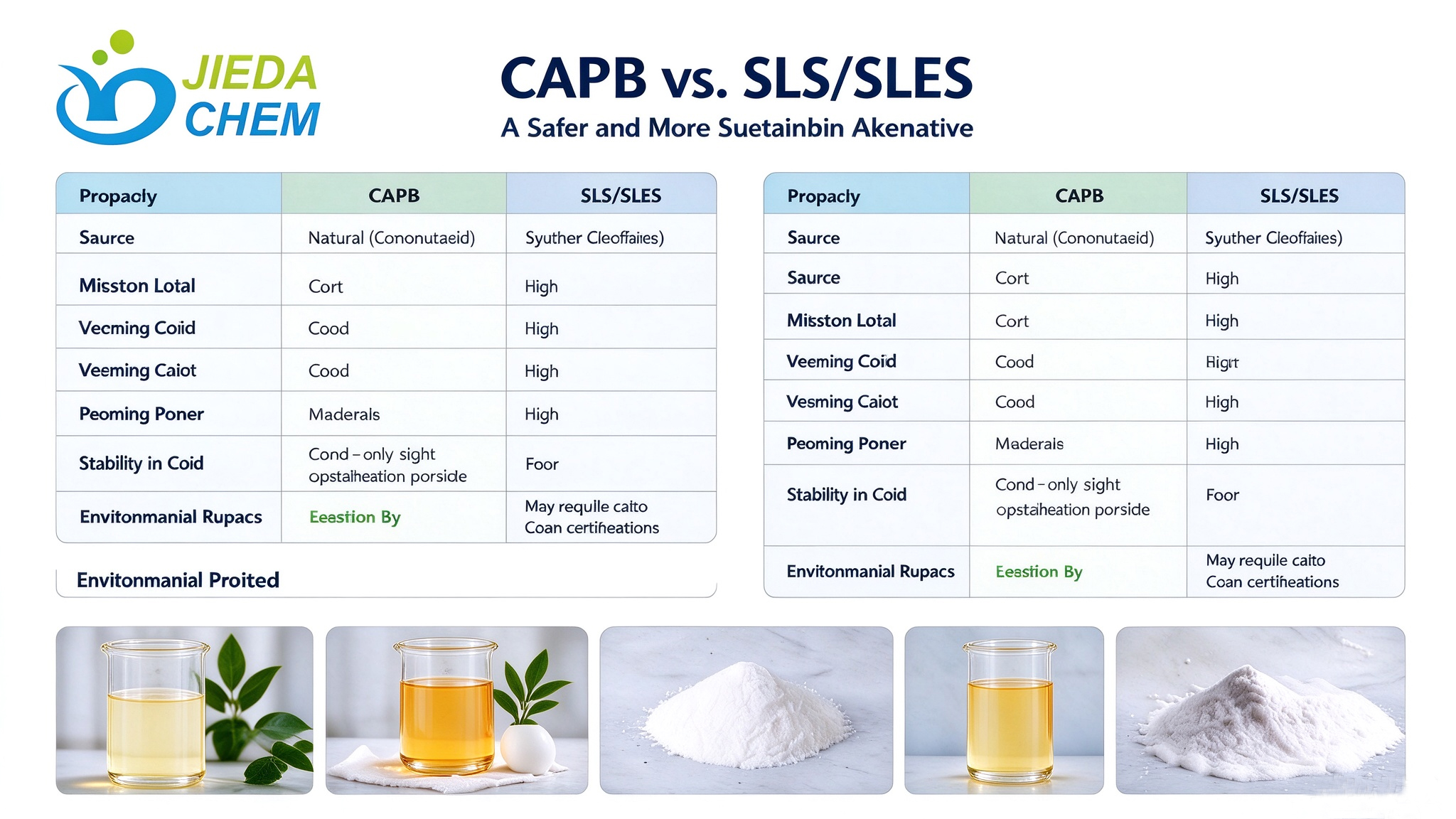
Property | CAPB | SLS / SLES |
Surfactant type | Amphoteric | Anionic |
Typical role | Co-surfactant | Primary surfactant |
Foam contribution | Good | Strong |
Cleansing contribution | Moderate | Strong |
Viscosity contribution | Can support viscosity in blends | Depends on formulation |
Compatibility | Broad | Commonly used with other surfactants |
Typical applications | Shampoo, body wash, facial cleanser | Shampoo, body wash, detergents |
The important question for formulators is therefore not which ingredient is universally “better,” but how different surfactants can be combined to achieve the desired performance.
For example, CAPB can be used with SLES when the formula requires strong cleansing and foam together with the benefits of an amphoteric co-surfactant.
CAPB and APG: A Popular Combination for Mild Cleansing
For natural-oriented or mild cleansing formulations, CAPB can also be combined with Alkyl Polyglucosides (APG).
APG is a nonionic surfactant used in shampoos, body washes, facial cleansers and other personal cleaning products. Jieda currently offers APG-0810, APG-1214 and APG-0814 grades.
Explore Jieda APG-0810 / APG-1214 / APG-0814
A CAPB + APG system can be considered when the formulator wants to combine:
- Amphoteric and nonionic surfactant technologies
- Good foam
- Mild cleansing
- Broad formulation compatibility
- A natural-oriented product concept
The optimum ratio should always be determined through formulation testing because surfactant active matter and the final composition can significantly affect viscosity, foam and sensory performance.
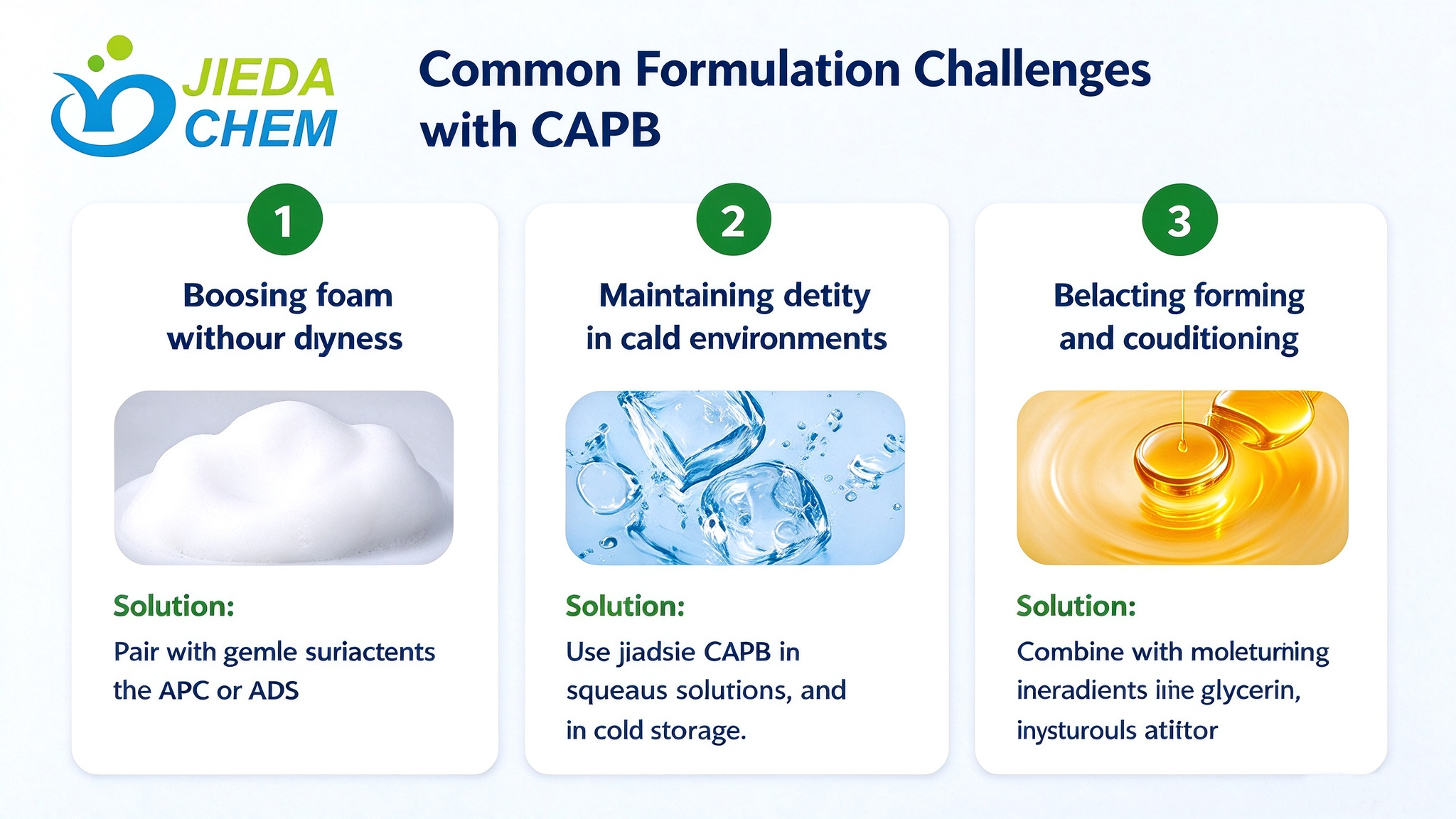
CAPB and Amino Acid Surfactants
CAPB can also work well in premium cleansing systems containing amino-acid-based surfactants.
For example, Sodium Cocoyl Glycinate is a plant-derived amino-acid surfactant used in facial cleansers, shampoos, body washes, baby care and other personal care products.
Jieda offers Sodium Cocoyl Glycinate in both 100% powder and approximately 30.3% liquid grades.
Explore Jieda Sodium Cocoyl Glycinate
A formulation combining CAPB with amino-acid surfactants can be considered when developing a premium facial cleanser or mild daily cleansing product.