
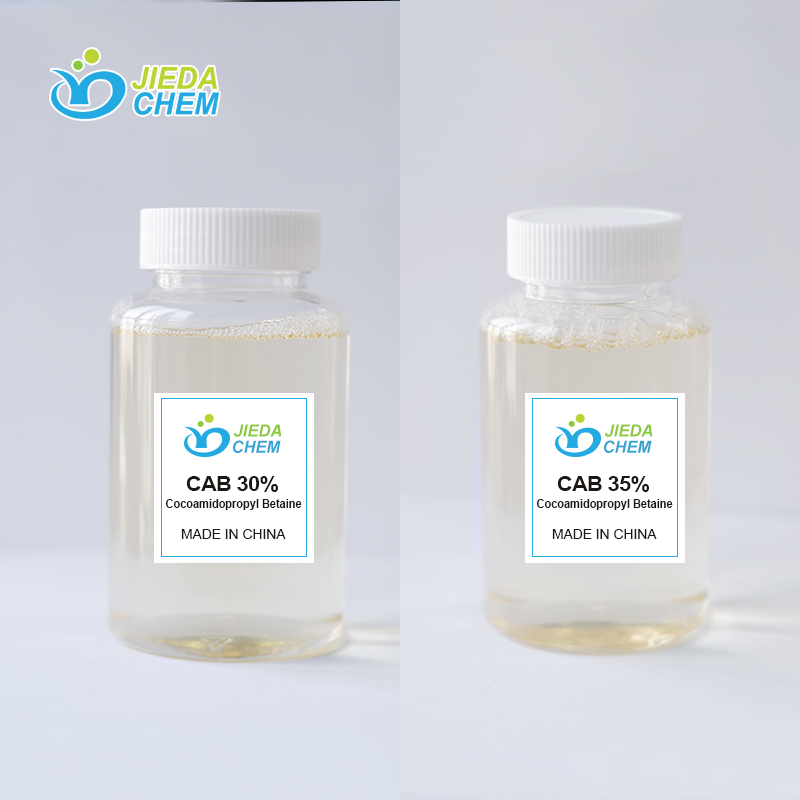
Cocamidopropyl Betaine (CAPB): The Core Ingredient for Baby Care Formulations
In the development of baby care products, cocamidopropyl betaine (CAPB) is a core raw material that determines a product’s mildness and market competitiveness. For baby care product manufacturers and large-to-medium-sized cosmetic raw material importers, mastering the characteristics, ratios, and application logic of this ingredient is crucial for creating premium, tear-free formulas and capturing market share. This guide offers an in-depth analysis of CAPB cocamidopropyl betaine in baby care applications, covering its principle, formula value, usage standards, and market trends, while also addressing core questions like “cocamidopropyl betaine safe for babies?”
I. The Source of CAPB: A Naturally Mild Surfactant
Cocamidopropyl betaine (CAPB) is derived from natural coconut oil and sugar beets:
-
Fatty acids are extracted from coconut oil and reacted with dimethylaminopropylamine to form an intermediate product.
-
This intermediate product then undergoes a quaternization reaction with sodium chloroacetate, sourced from sugar beets, resulting in cocamidopropyl betaine liquid.
The mildness of CAPB stems from its unique zwitterionic molecular structure (a quaternary ammonium cation + a carboxylate anion). This structure allows it to adjust its ionic properties flexibly according to the formula’s pH—exhibiting cationic properties in acidic environments and anionic properties in neutral-to-alkaline environments.
Jieda testing confirms that this structural stability makes CAPB an ideal choice for baby skin: its charge adaptability allows it to effectively remove dirt without compromising the baby’s delicate skin lipid barrier (which is only 30% the thickness of adult skin). Furthermore, it is compatible with the baby’s weak acidic skin environment of 5.5–7.0, perfectly aligning with Jieda Chemical’s CAPB product range of 5.0–7.0. These characteristics sufficiently prove that cocamidopropyl betaine good for skin and hair, making it suitable for baby products. To buy cocamidopropyl betaine that is laboratory-tested and performance-stable, check Jieda Chemical’s technical specifications.
II. Core Formula Value: Addressing Two Major Baby Care Pain Points
2.1 Tear-Free Formulation: Protecting the Delicate Ocular Mucosa
Traditional surfactants like Sodium Lauryl Sulfate (SLS) bind with ocular mucosal proteins, causing stinging, which often leads to the question, “cocamidopropyl betaine harmful?” The zwitterionic structure of CAPB fundamentally avoids this risk:
-
Clinical data show that formulas containing CAPB reduce eye irritation by 80% compared to those containing SLS.
-
Controlling the CAPB concentration between 2% and 8% (achievable by diluting Jieda Chemical’s 30%/35% concentration products) ensures the formula reliably passes tear-free testing certification. Furthermore, within this concentration range, a higher concentration correlates with increased product mildness.
For manufacturers, choosing Jieda Chemical’s low-irritation CAPB is a shortcut to developing “cocamidopropyl betaine shampoo” and body wash “tear-free formulas,” and is a key differentiated selling point to attract parents. For customized formulation support, you can submit your request via Jieda Chemical’s product page.
2.2 Balancing Cleansing and Experience: Optimizing Foam Texture and Safety
Baby care products must balance cleansing power with mildness. CAPB perfectly achieves this goal through its synergistic foaming advantage (a core selling point of Jieda Chemical’s product):
-
When co-formulated with Sodium Laureth Sulfate (SLES) or amino acid surfactants, adding 5% CAPB can increase foam volume by 30% and foam stability by 50%. This creates a dense, easy-to-rinse foam texture, highly suitable for shampoo com cocamidopropyl betaine and two-in-one bath/cleansing products.
-
Uniform foam prevents excessive localized concentration of cleansing ingredients, ensuring effective cleaning while reducing the risk of sensitization, further confirming that cocamidopropyl betaine for hair and cocamidopropyl betaine for skin are friendly. For exclusive co-formulation ratio solutions, consult Jieda Chemical’s technical support documents.
III. Synergy: Stabilizing the Formula System and Enhancing Mildness
CAPB acts as a “coordinator” in the formula, significantly boosting the performance of other ingredients:
-
Reducing Irritation: Co-formulating SLES with CAPB at a 3:1 ratio can reduce the skin irritation of the formula by nearly 40% compared to using SLES alone. This strategy is vital for developing cocamidopropyl betaine cosmetics and adapting to infants’ sensitive skin. You can request a formulation compatibility testing report from Jieda Chemical.
-
Viscosity Control: CAPB possesses excellent thickening properties (a core characteristic of Jieda Chemical’s products). When compounded with Sodium Chloride or Hydroxyethyl Cellulose (HEC), it allows for precise adjustment of product texture—improving the product’s pourability, facilitating production and consumer use, while also extending the dwell time of cleansing ingredients on the skin surface, reducing the irritation caused by rubbing on a baby’s skin. For thickener compatibility solutions, visit Jieda Chemical’s product page for inquiries.
IV. Golden Ratio: CAPB Concentration and pH Control Standards
Precise control of CAPB dosage is key to maximizing its efficacy. Here is an application guide for Jieda Chemical’s 30%/35% concentration CAPB:
Key Reminders:
-
Concentration Below 2%: Ineffective in delivering core benefits such as reducing irritation and optimizing foam.
-
Concentration Above 8%: Can lead to excessive product viscosity, causing issues like cloudiness and difficulty rinsing (particularly noticeable in cocamidopropyl betaine soap-based products).
There are alternative options on the market, such as soap without cocamidopropyl betaine and face wash without cocamidopropyl betaine, but these products often lack the combined mildness and foaming advantages of CAPB. For sourcing more baby-safe raw materials, browse Jieda Chemical’s product catalog.
V. Market Trends: Green, High Quality, and Innovative CAPB Become Mainstream
Three major trends are driving the demand transformation for CAPB:
-
Raw Material Sustainability: CAPB made from sustainably farmed coconuts (such as Jieda Chemical’s eco-friendly product) better meets consumer demand for “green and environmentally friendly” baby cocamidopropyl betaine products.
-
High Quality: CAPB with low free amine content (<0.5%) can further reduce the risk of sensitization, making it the preferred ingredient for high-end baby care formulas. Jieda Chemical’s CAPB products undergo stringent quality control, alleviating concerns about “cocamidopropyl betaine safe for skin?” from the source.
-
Formula Innovation: Co-formulating CAPB with Alkyl Polyglycosides (APG) and amino acid surfactants—new, mild ingredients—achieves a triple advantage of “cleansing power, mildness, and biodegradability.” This is the future direction for cocamidopropyl betaine uses in cosmetics and other applications.
Importers interested in sourcing cocamidopropyl betaine can connect with Jieda Chemical’s sustainable supply chain to discuss bulk purchasing cooperation.
VI. Conclusion
Cocamidopropyl betaine (CAPB), thanks to its natural origin, excellent mildness, and formula synergistic advantages, has become an essential ingredient for mid-to-high-end baby care products, widely used in cocamidopropyl betaine skincare and haircare. With the global baby care market experiencing a Compound Annual Growth Rate of 6.5%, leveraging high-quality CAPB (such as Jieda Chemical’s 30%/35% concentration products) is key for manufacturers to create competitive products and for importers to capitalize on market opportunities.