
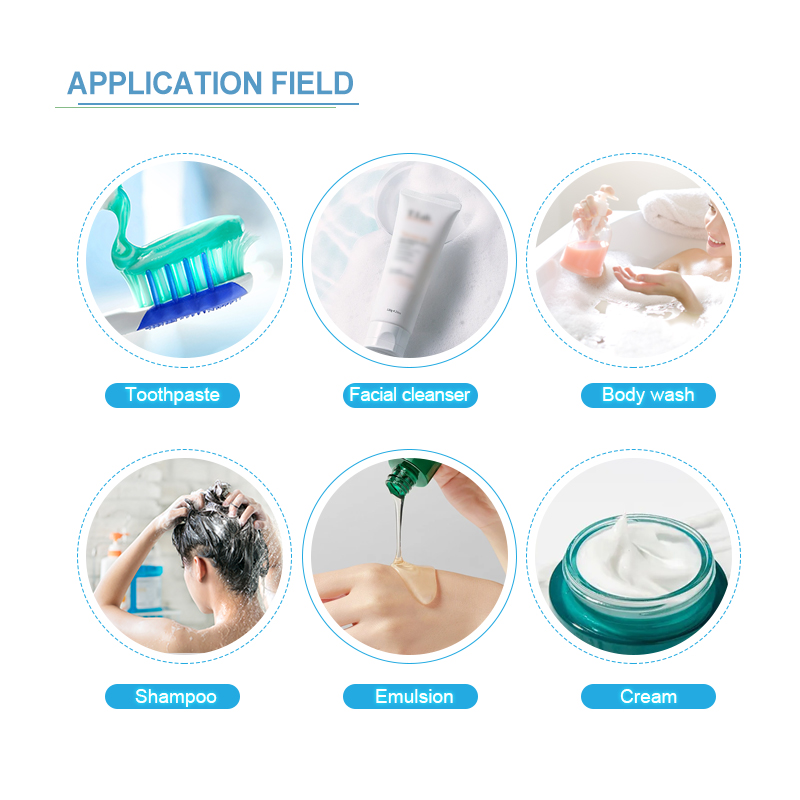
HPMC, also called Hydroxypropyl Methylcellulose, includes hot-soluble HPMC and cold-soluble HPMC. It matters a lot to choose correct HPMC for formulas of detergent, cleaning care and household care products.This guide cuts through the confusion, explaining the science, the consequences of error, and how to specify the right HPMC for your production.
The Deciding Factor: Gelation Temperature & Chemical Substitution
The core difference is defined by the gelation (or thermal gelation) temperature, a property determined by the ratio of methoxy to hydroxypropoxy groups on the cellulose chain. This ratio is expressed in common pharmacopeia types like HPMC 2208, HPMC 2910, HPMC 1828 and HPMC 2906, but for industrial use, the solubility behavior is the critical specification.
-
Hot-Soluble HPMC (Typified by grades like E Series: HPMC E5, HPMC E15, HPMC E50)
-
Mechanism: Possesses a high gelation temperature (typically >85°C). It readily dissolves in hot water, forming a low-viscosity solution that undergoes a dramatic viscosity increase or forms a firm gel upon cooling.
-
Key Property: Higher methoxyl substitution. It is not designed for cold-water dispersion.
-
-
Cold-Soluble HPMC (Typified by grades like K Series: HPMC K4M, HPMC K15M, HPMC K100M)
-
Mechanism: Features a low or modified gelation temperature. It is physically or chemically treated to disperse freely in cold water, hydrating smoothly without lumping to develop its full viscosity.
-
Key Property: Higher hydroxypropoxyl substitution or special surface treatment. It is essential for any process without a heating cycle.
-
Consequences of Error: A Direct Comparison
Using the wrong type doesn’t just reduce efficiency; it causes total functional failure.
| Application Scenario | Correct HPMC Grade & Process | Result of Using the Wrong HPMC Type |
|---|---|---|
| Dishwashing Liquid / Laundry Detergent (Mixed in cold water tanks) | Cold-Soluble HPMC (e.g., HPMC K100M, HPMC K4M) dispersed in cold water. Develops consistent viscosity, stabilizes foam, and suspends agents. | Hot-Soluble HPMC forms irreversible, fish-eye lumps. Viscosity fails to develop, leading to a watery, separated, and non-functional product. Batch loss is guaranteed. |
| Industrial Cleaner / Hard Surface Cleaner (Room-temperature compounding) | Cold-Soluble HPMC hydrates at ambient temperature, providing reliable thickening and rheology control. | Hot-Soluble HPMC will not dissolve, creating a gritty, inhomogeneous mixture that clogs filters and pumps. |
| Pharmaceutical Gel or Food Thickener (Process with controlled heat-cool cycle) | Hot-Soluble HPMC (e.g., HPMC E5) dissolved in hot water, forming a gel upon cooling. | Cold-Soluble HPMC may hydrate but could exhibit unexpected rheology or premature structuring during processing. |
Specification Checklist for Procurement & R&D
To prevent costly errors, your technical data sheet (TDS) request and purchase order must be precise. Here is your essential checklist:
-
Primary Specification: Solubility Type
-
**Clearly state: “Require COLD-SOLUBLE HPMC for cold-water processing” or “Require HOT-SOLUBLE HPMC for thermal gelation process.”
-
Do not only list viscosity (e.g., HPMC 4000 mPa.s) or a general type like HPMC 2910. This is insufficient.
-
-
Define Application & Process
-
Disclose the end use of HPMC: e.g., “Thickener for cold-mix alkaline detergent.”
-
Specify the maximum water temperature during initial mixing.
-
-
Request & Validate Samples
-
Always conduct a small-scale HPMC use test in your actual production water and under your mixing conditions before approving bulk HPMC chemical.
-
Verify the viscosity development curve matches your formula’s requirements.
-
Navigating the Market: Insights for Asia-Pacific Buyers
For buyers sourcing in the Asia-Pacific region, including hubs like Hong Kong, understanding local supply dynamics is key. Reputable chemical suppliers should provide clear technical data. Resources like the Hong Kong Chemicals Association (HKCA) [https://www.hkca.hk/] offer frameworks for industry standards.
When evaluating HPMC price, consider the total cost of failure. The lowest upfront HPMC price becomes exponentially costly if the grade is incorrect and destroys a full production run. Partner with suppliers who ask detailed application questions.
Conclusion: Precision Prevents Product Loss
In detergents and cleaning formulations, the functional uses of HPMC are entirely dependent on matching its solubility to your process. There is no margin for error.
At Jieda, we provide more than just HPMC cellulose the raw material. We deliver application-specific solutions. Our cold-soluble HPMC series is engineered for reliability in detergent, dishwashing liquid, and industrial cleaner applications, ensuring seamless cold-water dispersion and consistent performance. Explore our technical data for Detergent-Grade HPMC.
Formulating with confidence starts with the right raw material partner.
Contact our technical support team today. Share your process parameters, and we will guarantee the specification of your HPMC polymer is correct from the first sample to the full container load.