Introduction
In personal care and cleaning products, the right surfactant is key to performance and success. Want to know the secret behind rich shampoo lather and powerful detergent cleaning? Often, it’s two powerful ingredients: Sodium Lauryl Ether Sulfate (SLES) and Sodium Lauryl Sulfate (SLS). These surfactants are crucial for creating effective products that meet consumer demands and stay cost-effective.
This guide explores practical formulation strategies with SLES and SLS, giving you proven blueprints for best-selling products.
SLES vs. SLS: A Property Comparison
Let’s break down the key differences to help you choose the right one.
Foam Quality and Viscosity
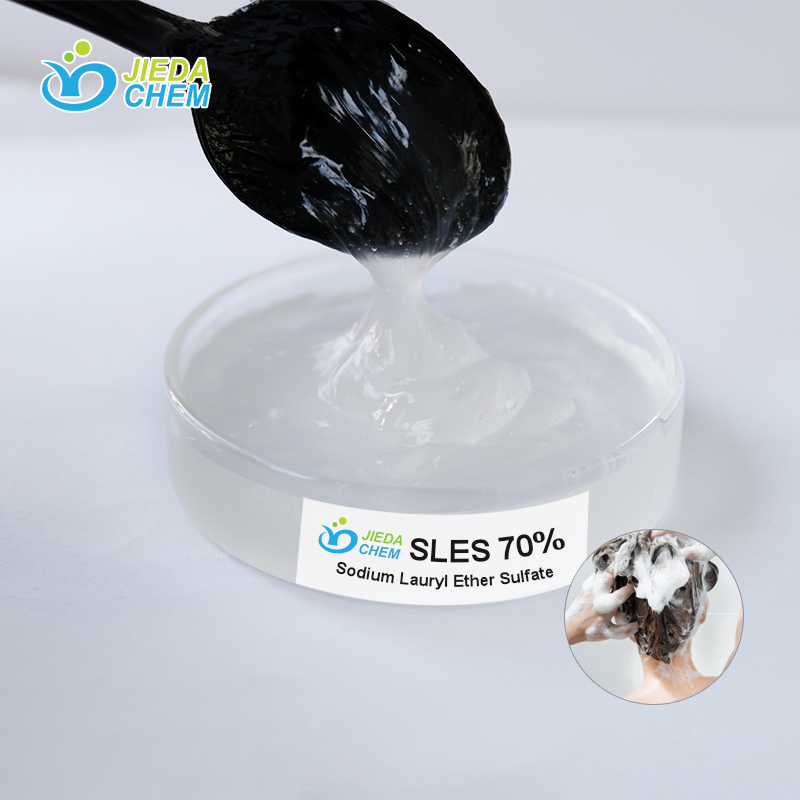
SLES is famous for its rich, creamy, and abundant lather. Consumers love this, as it signals effective cleaning. As a primary surfactant, it works wonderfully with foam boosters like Cocamidopropyl Betaine (CAPB) and thickeners like Cocamide DEA. This synergy makes it easy to create a luxurious, creamy texture in shampoos and body washes.
SLS, on the other hand, is a powerful cleaner that produces a lot of fast-forming foam. While its lather feels slightly different, it works exceptionally well in heavy-duty jobs. Furthermore, its powder form is perfect for building viscosity in solid products like powdered cleansers and soaps.
Mildness and Skin Feel
SLES is generally milder than SLS. The addition of ethylene oxide groups reduces its potential for skin irritation. When you pair it with mild surfactants like CAPB, it becomes even gentler, resulting in a pleasant skin feel ideal for daily use.
SLS is a highly effective “stripper” of oils and stains. However, this strength can sometimes lead to skin dryness and irritation if used alone in high amounts. Therefore, it’s best for heavy-duty cleaners where superior cleaning power is the top priority.
Hard Water Tolerance and Cleaning Power
SLES performs well in soft to moderately hard water. However, its foam and efficiency can drop in very hard water without help from chelating agents or other co-surfactants.
SLS has strong cleaning power against oily soils and stains. For instance, when you pair it with a hard water-tolerant surfactant like Alpha Olefin Sulfonate (AOS), the combination maintains excellent cleaning performance even in challenging water conditions. This makes it ideal for laundry and all-purpose cleaners.
Cost-Effectiveness
Both SLES and SLS offer great value. They provide a high level of performance at a competitive cost, making them perfect for mass-market products. You can also use a small amount of SLES to boost lather and lower the cost of premium, mild surfactant systems.
Key Benefits of Using SLES & SLS
Why are these surfactants so popular? Here are the top reasons:
-
Proven Performance: Decades of safe, effective use across countless products have made SLES and SLS trusted ingredients. Formulators deeply understand their behavior and compatibility.
-
Excellent Versatility: Their true strength is adaptability. SLES can be the star in a daily shampoo, while SLS powder enables innovative solid product formats.
-
Synergistic Effects: Both work exceptionally well with other ingredients. They team up with foam boosters, thickeners, and other surfactants to create a final product where the performance is greater than the sum of its parts.
-
Supply Chain Security: As widely used chemicals, they benefit from a mature global supply chain. Partnering with a supplier that controls production from raw materials to finished product ensures consistency and cost advantages.
Practical Formulation Blueprints
Here are proven formulas to help you build your next product.
Blueprint 1: The Daily Shampoo & Body Wash
Goal: Create a consumer-pleasing product with rich lather, a pleasant skin feel, and a competitive price.
Recommended System: SLES (The Workhorse) + CAPB (The Enhancer) + CDEA (The Finisher)
How It Works:
-
SLES acts as the primary “Foam Engine,” delivering the rich, creamy lather consumers love.
-
CAPB (Cocamidopropyl Betaine) is the “Multi-Tasker.” It boosts foam density, improves mildness, and enhances skin feel.
-
CDEA (Cocamide DEA) serves as the “Texture Artist,” thickening the formula into a luxurious gel and stabilizing the lather.
Blueprint 2: The Heavy-Duty Cleaner
Goal: Achieve superior grease-cutting and stain removal, even in hard water, with a focus on cost-efficiency.
Recommended System: SLS (The Stripper) + AOS (The Partner) + Builder (The Booster)
How It Works:
-
SLS is the “Heavy Hitter,” breaking down oily soils and solid stains with exceptional power.
-
AOS (Alpha Olefin Sulfonate) acts as the “Hardy Sidekick,” providing excellent hard water tolerance for consistent performance.
-
A Builder (e.g., STPP) is the “Force Multiplier.” It inactivates water hardness minerals, freeing up the surfactants for maximum cleaning efficiency.
Blueprint 3: The Premium & Gentle Play
Goal: Develop “mild,” “green,” or “gentle” products without sacrificing lather or breaking the bank.
Recommended Strategy: Leverage SLES as a Strategic Booster.
How It Works:
-
Use mild, green surfactants like APG (Alkyl Polyglucoside) as the primary “Claim Drivers.”
-
Incorporate a small percentage of SLES as a “Performance Catalyst.” It dramatically boosts lather quality and improves the user experience, making the premium formula more marketable while keeping costs manageable.
How to Choose: SLES or SLS?
Your product’s primary goal determines the best choice:
-
Choose SLES for: Mildness and rich lather in leave-on or frequent-use products like shampoos and body washes.
-
Choose SLS for: Superior cleaning power in rinse-off and heavy-duty applications like laundry detergents and industrial cleaners.
-
Choose SLS Powder for: Creating solid formats like powder washes and soap bars.
-
Use SLES as a Booster: To enhance the lather and cost-effectiveness of premium mild systems.
Conclusion
Sodium Lauryl Ether Sulfate (SLES) and Sodium Lauryl Sulfate (SLS) are fundamental, versatile, and highly effective tools for any formulator. By understanding their unique properties and synergistic potential, you can create high-performing, commercially successful products for any market.
Frequently Asked Questions (FAQs)
What is the main difference between SLES and SLS?
The key difference is their chemical structure and mildness. SLES contains ethylene oxide groups, making it generally milder for skin contact. SLS is a stronger cleanser preferred for powerful degreasing.
Is SLES gentler than SLS?
Yes, generally, SLES is considered gentler on the skin. This is why it’s more common in personal care products designed for daily use on skin and hair.
Can SLES and SLS be used together?
While possible, it’s more common to use them as the primary surfactant in different systems. For example, SLES is typically paired with CAPB for personal care, while SLS is paired with AOS for cleaning.
What is a good foaming booster for SLES?
Cocamidopropyl Betaine (CAPB) is an excellent and widely used foaming booster and viscosity modifier that works perfectly with SLES.
Why is SLS used in solid soaps?
SLS is available in a powder form, which is ideal for dry blending into solid formats like soap bars. It provides strong cleansing and foaming properties in these products.
Need a customized surfactant solution tailored to your specific product? Our technical team is on standby.
Contact us now to request complimentary samples of SLES, SLS, CAPB, APG, or other daily chemicals for your trials.